
Thames Water will be questioned by Reading councillors on 12 November. Its slides count 1,146 paper and rag sewer blockages in a year, but leave key Reading figures blank.
Thames Water will be questioned by Reading councillors on Thursday evening, with its hosepipe ban now in its 111th day and no end date set. Company representatives are due at the Strategic Environment, Planning and Transport Committee at 6.30pm on 12 November, in the Council Chamber at the Civic Centre.
The agenda says they will give a presentation “on matters affecting the Borough”. Councillors will then question them on Thames Water’s “activities, performance and impact on Reading” (committee papers).
The company’s slides are already published (Thames Water presentation). They carry a handful of local figures, and leave several of the Reading sections empty.
The Reading figures
One slide gives numbers for “the 3 Parliamentary constituencies that make up Reading”. Those seats reach beyond the borough, into parts of West Berkshire and Wokingham. The slide says:
- 20,950 households are on Thames Water’s Priority Services Register, for customers who need extra help
- 4,741 households have been offered help with their bills
- 1,146 sewer blockages caused by paper and rag were attended in the last 12 months
- 1,501 Thames Water employees live in the area
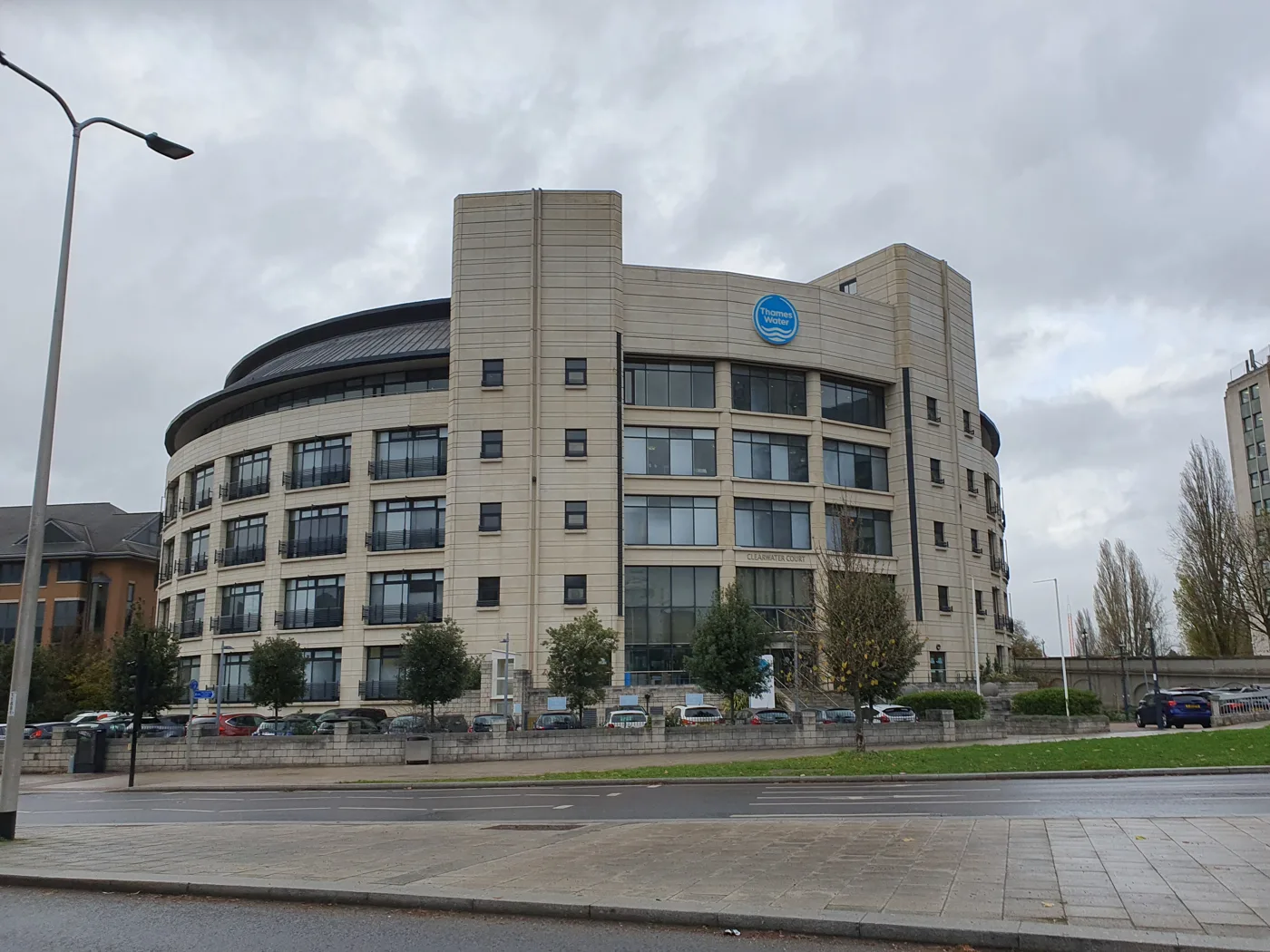
The company’s head office and control centre are at Clearwater Court, on Vastern Road in Reading.
What the slides leave out
Three slides headed for Reading’s sewerage carry headings only. “The Reading waste water system” lists “Area covered”, “Relevant STWs”, “Rivers” and “Key investment locations”, with no detail under any of them. A “Performance overview” slide lists “Pollution performance and EDM data”, the monitors that record sewage spills, but gives no figures. A slide on “Recent updates” is the same.
The slide on the hosepipe ban says the ban “has delivered a ****% drop in demand since implementation in 2026”. The number is missing. Thames Water’s own hosepipe ban page says water use across the Thames Valley and Home Counties has fallen by up to 6%, and household use in London by up to 3%.
Councillors may get the missing figures on the night. We will add them here if they are given.
The company-wide picture
Most of the slides cover Thames Water as a whole. From its annual report for the year to March 2026, the company says it:
- spent a record £2,680 million on its network, 20% more than the year before
- cut pollution incidents affecting rivers by 18%
- reached burst mains and other incidents 40% faster on average
- gave £260 million of help with bills, and had more than 560,000 households on its WaterHelp discount of 25% to 99%
It says it plans to spend more than £20 billion over five years on leaks, burst pipes, rivers and water treatment. It calls this “our biggest upgrade in 150 years”.
On sewers, the slides say blockage-related pollution is down 35% on the same period last year. The company says it detected and cleared 4,895 blockages early in 2025-26, using depth monitors in the sewers, its highest yearly total. That was 7.7% of all its blockages.
Why winter matters
The slides explain why this year’s dry summer could cause trouble now the rain has returned. July rainfall across the Thames catchment was 2% of normal, with less than 1mm all month. August was 43% of normal.
Thames Water says dry ground can hide cracked pipes and leaking joints, because there is no groundwater to seep in. When heavy rain follows, water can flood into the sewers through those defects. Rain can also shift sediment that built up over the summer. The company says that raises the risk of “blockages, sewer flooding, pollution incidents” across the system.
Its long-term plan for sewers and drainage is still being written. A draft is expected by November 2027 and the final version by August 2028.
What it means for you
- The hosepipe ban still applies. Thames Water’s page, last updated on 12 October, says sustained rain is still needed before it can be lifted. Our hosepipe ban explainer has what you can and cannot do.
- Wipes cause blockages. More than a thousand Reading-area sewer callouts in a year were for paper and rag. Only toilet paper should be flushed.
- Extra help with bills. If you are struggling to pay, ask Thames Water about WaterHelp. If someone in your home needs extra help, for example during a supply cut, ask to join the Priority Services Register.
- You can go along. The meeting is open to the public. The papers are on the council’s website.
The same committee will also note the council’s own carbon figures, which we covered in Reading Council Cut Its Carbon by 76% but Missed Its 85% Target.
Have your say