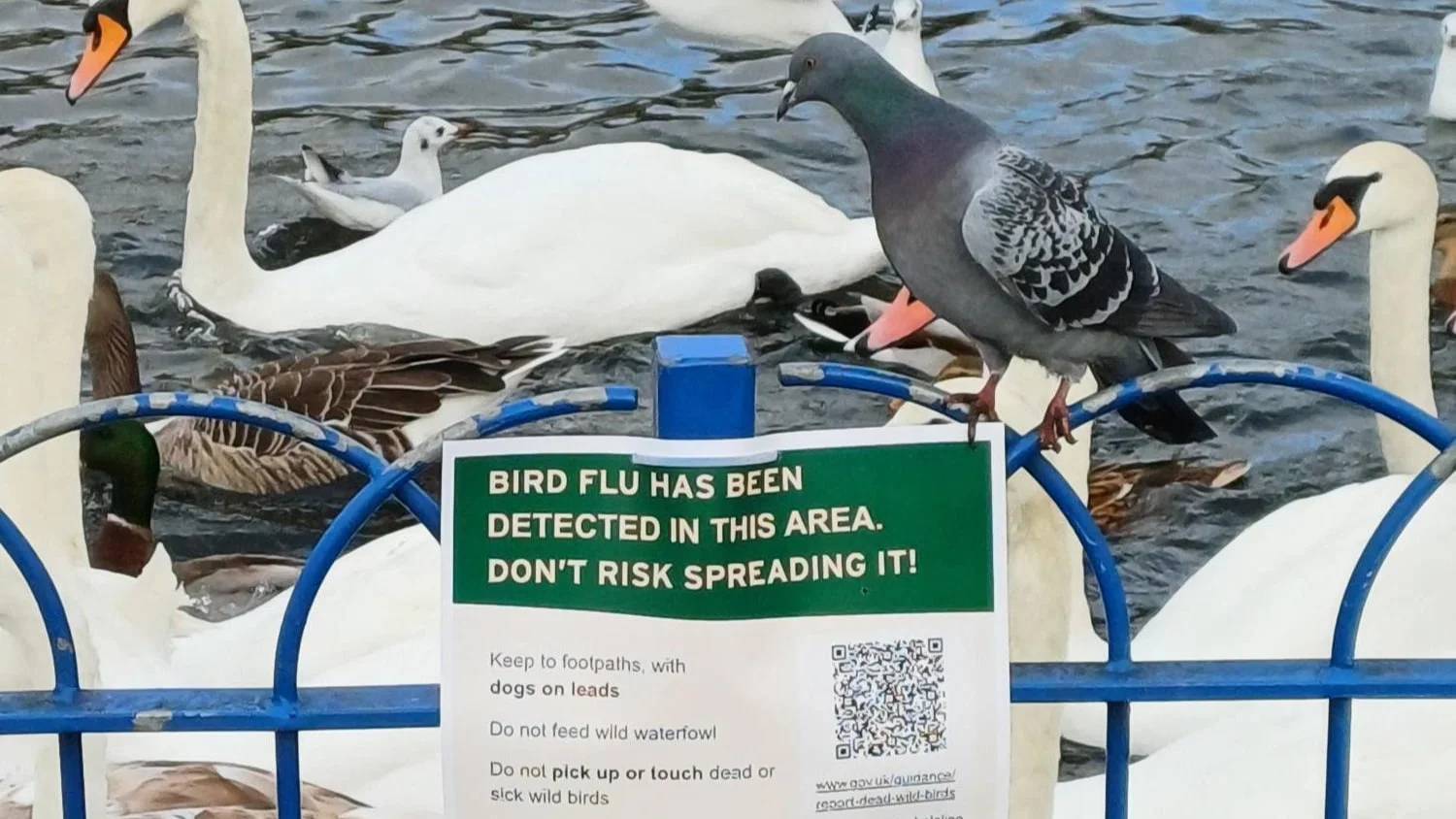

Two cases of bird flu have been confirmed in wild birds on the Thames at Caversham. The council asks people not to feed the birds and to keep dogs on leads.
Bird flu has been confirmed in two wild birds on the River Thames at Caversham. Reading Borough Council announced the cases on Thursday and asked people not to feed the birds along the river.
The council is watching the riverbank around:
- Rivermead Park
- Caversham Bridge
- Christchurch Meadows
It is working with the Animal and Plant Health Agency (APHA) and Swan Support, its approved wildlife partner, to deal with reports of sick birds (Reading Borough Council, 19 November). Warning posters have gone up on the railings at Thames Promenade.
Overview
Two wild birds on the Thames at Caversham have tested positive for bird flu. The risk to people is very low, the council says. Do not feed the birds or touch any that are dead or sick, keep dogs close, and report dead birds to Swan Support on 07968 868172.
What the council said
The council says the risk to human health “remains very low”. The UK Health Security Agency is monitoring the situation.
Cllr Finn McGoldrick, the council’s lead councillor for environmental services and community safety, said: “While this news may be concerning to residents, please be assured expert advice is that the risk to the public remains very low and infection in humans is extremely unlikely.”
He said officers were working with APHA “to monitor the situation, remove birds where appropriate, and ensure residents have the latest information they need to stay safe and help prevent the spread of the disease.”
What it means for you
If you walk, run or take children to feed the ducks along the river, the council asks you to:
- not feed wild birds
- not touch or pick up dead or sick wild birds
- keep dogs under close control, and on leads where signs ask
- avoid bird droppings and feathers
- wash your hands well after visiting the riverside
To report a dead wild bird, call Swan Support on 07968 868172, which can collect it. You can also use the government’s dead wild bird reporting service or ring the Defra helpline on 03459 33 55 77. The council says every report helps build a picture of how the virus is spreading through local wildlife.
If you keep chickens, ducks or other birds
Stricter rules already apply across England. An avian influenza prevention zone with compulsory housing has covered all of England since 13 November (GOV.UK, bird flu latest situation). Under it (GOV.UK, cases and disease control zones):
- if you keep 50 or more birds, you must house them
- if you keep fewer than 50 for your own use only, you do not have to house them
- if you keep fewer than 50 but sell or give away their eggs, meat or the birds themselves, you must house them
All keepers must also follow the zone’s biosecurity rules, such as keeping ducks and geese apart from other birds and stopping contact with wild birds.
The government raised the risk of bird flu reaching poultry in Great Britain to high on Friday, where biosecurity is poor. It also revoked the general licence for poultry gatherings, so a show or sale with chickens, ducks or geese now needs its own licence.
The council’s officers give advice to bird keepers on 0118 937 3787. The government’s guide to housing your birds safely covers the practical side.
Have your say