Summer 2026 averaged 20.0C in Reading, 1.3C above last year's record. July was both the driest and the sunniest month in the university's whole 118-year record.
Reading has just had its hottest summer since daily weather records began here in 1908, and it was not close.
The mean daily temperature for June, July and August was 20.0C. The previous record was 18.7C, set last year. Summer 1976, still the benchmark in most people’s memory, averaged 18.5C.
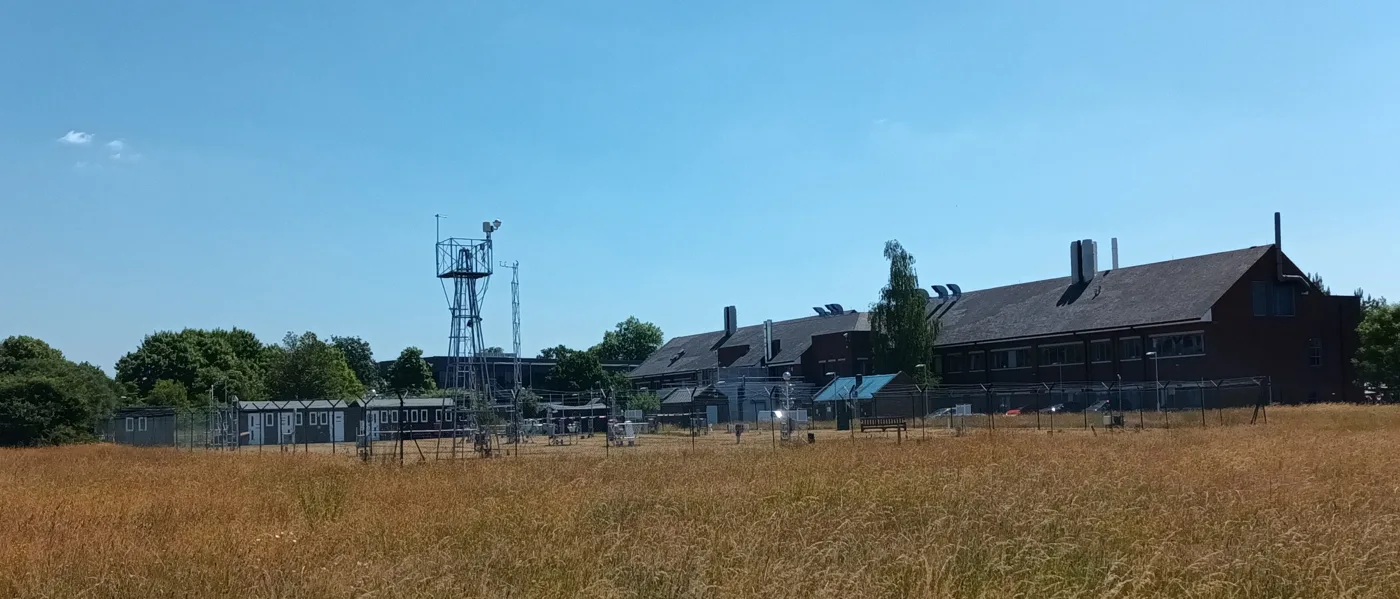
The figures come from the University of Reading’s Atmospheric Observatory at Whiteknights, analysed by Dr Stephen Burt, a visiting research fellow in the Department of Meteorology (University of Reading, 1 September 2026).
The records that fell
- Hottest summer by mean daily temperature: 20.0C, against 18.7C in 2025 and 18.5C in 1976.
- Highest mean daily maximum: 26.2C. The previous highest was 24.7C in 1976.
- Highest mean daily minimum: 13.8C, beating 13.2C in 2003.
- Hottest night ever recorded in Reading: 21.3C on 26 June. The 25th and 26th of June were the warmest and second warmest nights in the whole record.
- Hottest May day: 33.0C on 25 and 26 May. Hottest June day: 34.9C on 24 June. Hottest August day: 36.7C on 13 August.
- Sunniest month ever recorded: July, with 364 hours, an average just short of 12 hours a day. The previous record was May 2020, at 345 hours.
May, June and July were each the hottest month of that name in almost 120 years of observations. August was the equal second hottest August on record, one tenth of a degree below 1995, after a much cooler final week.
Twenty-one days above 30C
Maximum temperatures reached or exceeded 30C on 18 days across June, July and August, plus three more in May. That makes 21 for the year so far. The previous record for a whole year was 14, in 1976.
Put another way, 2026 alone has already produced more 30C days than the whole of the 1950s, the 1960s, the 1970s including 1976, the 1980s or the 1990s.
Five heatwaves, and one day that stopped it being four
In Berkshire the heatwave threshold is three or more consecutive days at or above 28C. Reading had five such spells by the end of August:
- 23 to 28 May, six days
- 21 to 27 June, seven days
- 5 to 13 July, nine days
- 15 to 17 July, three days
- 12 to 14 August, three days
That is 28 days inside a heatwave. One day breaks up what would otherwise read even more starkly: 14 July peaked at 27.7C, three tenths of a degree short of the threshold. Without that, the summer would have counted four heatwaves across 29 days, the longest running 13 days from 5 to 17 July.
Only one earlier year in Reading recorded five heatwaves by the modern definition. That was 1911, and none of its spells lasted longer than three days, for 15 heatwave days in total.
Then it stopped raining
Rain fell on 23 days across the summer. Two summers were drier by that measure, 1996 with 13 rain days and 1976 with 14.
The dry spell in the middle is the harder number. In the 64 days from 15 June, measurable rain fell on four days and amounted to 2.5mm. A normal year produces more than 100mm over the same period.
July was the driest July in the university’s record. Parts of the Reading area recorded no measurable rainfall at all during the month. That is the first time it has happened in any calendar month since continuous rainfall records for the area began in 1858.
Rain in the first half of June and the last week of August was enough to keep summer 2026 out of the ten driest summers on the university’s list.
The sunniest spring and summer ever measured here
Every month since March has been sunnier than normal. Reading passed its average total annual sunshine on 25 August, with more than four months of the year left.
Summer 2026 recorded 891 hours of sunshine, a daily average of 9.7 hours, and passed summer 1976’s total of 843 hours on 24 August. March to August together produced 1,508 hours, well clear of the previous best of 1,389 hours in 2020. Sunshine records at the university began 70 years ago.
One number to be careful with
This analysis puts the highest temperature on 13 August at 36.7C. When we reported that day, we used the 36.9C figure the university published at the time, and flagged that its climatological table listed 36.7C. Both figures clear the previous August record of 36.4C from 2003. Our earlier report is here: Reading Hits 36.9C: Hottest August Day in 118 Years.
What it means for you
The consequences are still running. Thames Water’s hosepipe ban started on 23 July and is still in force across the whole of Reading, 43 days later. We have set out what is banned, what is not and who is exempt in Reading Hosepipe Ban Still in Force After 43 Days.
Reading Borough Council asked households on 27 August to check they are flood-ready, on the grounds that ground baked this hard sheds water instead of soaking it up. The borough’s flood warning areas are listed in Reading Flood Warnings: 5 Areas, Plus 3 on Alert.
Dr Burt’s read on the 30C count is unambiguous. He describes it as “clear evidence of our warming climate”.
Have your say