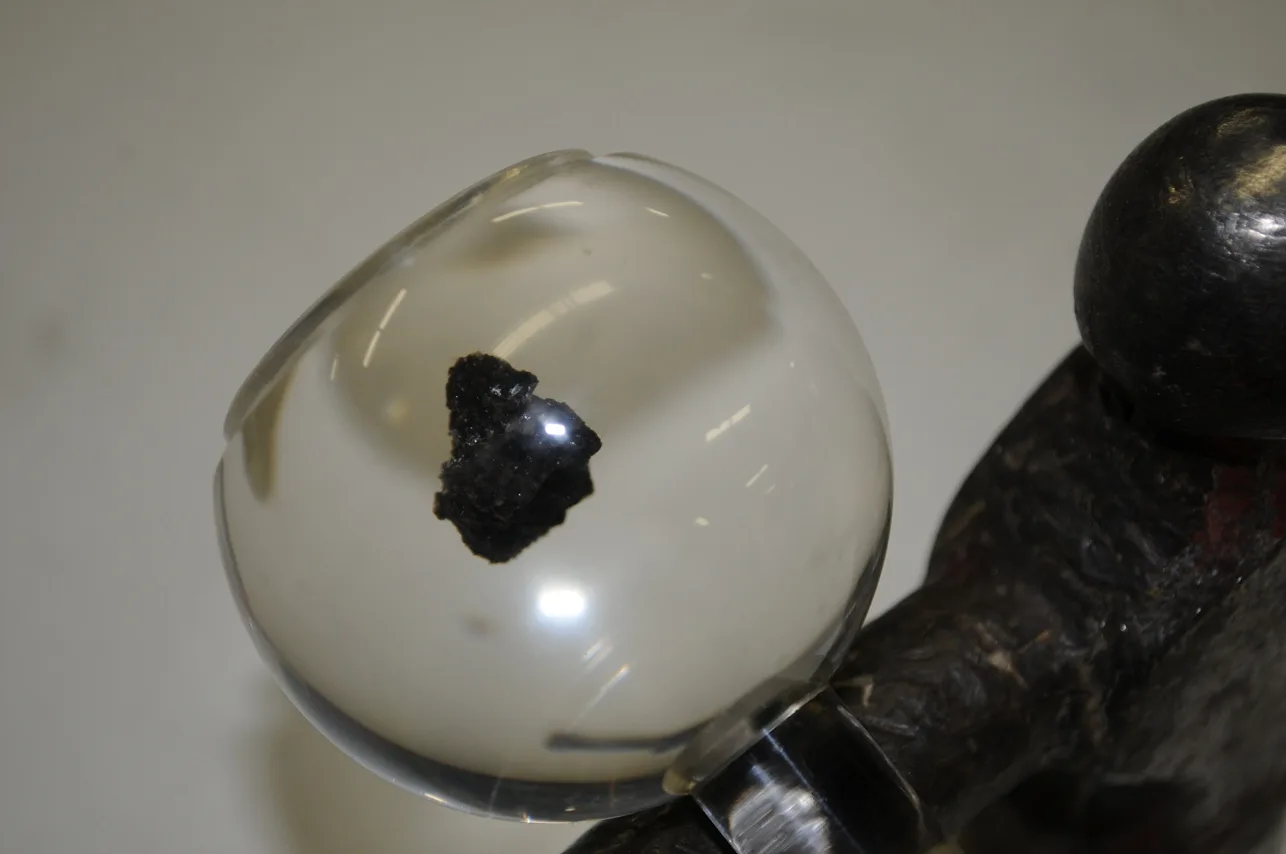

Real Apollo Moon samples go on show at the University of Reading on Saturday 24 October, free, with telescopes and 350 talk seats. Registration is open now.
Samples of the Moon brought back by the Apollo missions will be on display at the University of Reading next month. They are the centrepiece of the university’s free International Observe the Moon Night on Saturday 24 October, 3pm to 8pm, on its Whiteknights campus.
It is the third time the university has run the evening, with support from the Reading Astronomical Society. The organisers say this year is “extra special, as we have actual Moon samples from the Apollo missions on campus” (University of Reading event page).
International Observe the Moon Night is an annual global event led by NASA, and the university expects nearly one million people worldwide to take part this year. Reading’s is a satellite event.
What happens on the night
The evening runs in three parts, and you can drop into two of them without a talk ticket.
- Talks, 3pm to 6pm, in room G10 of the Palmer Building. Check-in opens at 2.30pm. These need a ticket, and there are 350 seats.
- The Ure Museum display, 2pm to 8pm, in the Edith Morley Building. The lunar samples and other space material are on show throughout.
- Outdoor Moon observing, 6pm to 8pm, on Palmer Quad, using university and Reading Astronomical Society telescopes. This depends on the weather.
The event is suitable for all ages. The university says the talks are better suited to children aged 10 and up, and there will be crayons and hands-on material for younger children in the Palmer Building foyer.
The talks
James O’Donoghue opens the programme at 3pm. Eight talks follow, split into the past and the present.
| Time | Speaker | Talk |
|---|---|---|
| 3.05pm | Prof Duncan Garrow | What was the purpose of Stonehenge? The sun, the moon, and much, much more |
| 3.25pm | Dr Sam Agbamu | Romans and the Moon: the scientific, the sacred, and the spooky |
| 3.45pm | Prof Anne Lawrence-Mathers | Viewing the Moon in the Middle Ages |
| 4.05pm | Prof Amy Smith | From Mercury to Artemis: what’s in a name? |
| 4.40pm | Prof Mike Lockwood | Using the Moon to study the Sun’s atmosphere through history |
| 5pm | Dr Katherine Shirley (University of Oxford) | Searching for water on the Moon |
| 5.20pm | Prof Suzanne Gray | The weather’s response to a solar eclipse |
| 5.40pm | Prof Chris Scott | About the Moon samples on campus (recorded) |
There is a 15-minute break at 4.25pm. The talks will be recorded and put online afterwards, with the link added to the event page.
Can’t make Saturday?
The samples will also be at the Ure Museum on two other days, with no registration needed:
- Friday 23 October, noon to 4pm
- Sunday 25 October, noon to 4pm
What it means for you
Register first, even if you only want the telescopes. The university asks everyone attending in person on Saturday to register, so it can plan visitor numbers for health and safety. General registration does not reserve a talk seat. You request a talk ticket on the same form, and the 350 seats go first come, first served (registration form).
Getting there. The university recommends the Shinfield Road or Pepper Lane entrance and Car Park 1A. Parking on campus is free on Saturday, because no permit is needed after 5pm or at weekends. Friday is different: Car Park 1A is pay and display during the Friday opening and may fill up. By bus, the direct service from Reading station runs through the campus; get off at the Whiteknights House stop and follow the event signs (University of Reading event page). There is more on getting around town on our trains and travel page.
Dress for outdoors. The observing is outside in late October. The organisers suggest layers, flat non-slip shoes and a head torch or a charged phone. There are no refreshments, but you can bring a hot non-alcoholic drink in a flask. You can bring your own binoculars or telescope, at your own risk.
If you have access requirements, the organisers ask you to contact them as soon as possible through the contact details on the event page.
Have your say