
Reading's Local Plan wants 14,850 homes by 2041, but the Environment Agency says the sewage works may not cope. Where the examination has actually got to.
Reading Borough Council wants to build 14,850 homes by 2041. It submitted the plan to do it in May 2025, held the hearings in February 2026, and eighteen months on it still has not been adopted. The hold-up is not the housing number. It is whether Reading’s sewage works can take the flow. This page sets out what the plan actually says and where the examination has got to, from the council’s and the Inspector’s own documents.
The quick answer
Reading’s Local Plan Partial Update proposes at least 14,850 additional homes between 2023 and 2041, an average of 825 a year. It was submitted to the Secretary of State on 9 May 2025 and is being examined by Planning Inspector Ms Joanna Gilbert.
Hearings finished in February 2026. As of August 2026 the plan is still under examination, and the Inspector is waiting on the council to resolve an Environment Agency objection about water quality before the schedule of main modifications can be consulted on. Until that consultation happens and the Inspector reports, the plan cannot be adopted.
The housing number, and how the council landed on it
Policy H1 of the submitted plan reads: “Provision will be made for at least an additional 14,850 homes (averaging 825 homes per annum) in Reading Borough for the period 2023 to 2041” (Local Plan Partial Update, Submission Draft, May 2025).
Three different numbers were in play, which is worth understanding because objectors use whichever suits them.
- 822 a year is what the Government’s standard method produces for Reading. That figure includes a 35% urban uplift applied because Reading is one of the 20 largest urban areas in England.
- 735 a year is Reading’s own assessed local housing need, from a Housing Needs Assessment finalised in 2024. That is 13,230 homes over the plan period.
- 825 a year is what the council has actually planned for, and it comes from capacity rather than need. A 2024 Housing and Economic Land Availability Assessment, using a methodology agreed with four other Berkshire authorities, concluded the borough could accommodate 825 a year.
So Reading has done something slightly unusual: it argued the standard method was wrong for a town of its size, then planned for a higher figure than its own local need anyway, on the grounds that national policy expects councils to boost delivery where they can. The council’s own reasoning is that the urban uplift “applies only to the biggest cities” and Reading is “by some distance the smallest of the authorities affected by the urban uplift” outside London.
Where the 14,850 homes come from
Most of them are already accounted for. The plan only has to find new sites for about 6,400.
The windfall allowance is worth a note: it assumes small sites of under ten dwellings keep coming forward at 96 a year to 2029, then tapering to 82 a year by 2039 to 2041. That is 1,534 homes the plan is counting on without naming a single site.
The real hold-up: water quality
The Inspector’s letter following the Stage 2 hearings, dated 18 March 2026, sets out the outstanding issues, and the first and most serious is water (EX101, Inspector’s post-Stage 2 letter).
The Environment Agency considers the council’s Water Quality Assessment “not sufficiently robust” and has raised water quality as “a significant constraint to development and growth in Reading”. Three specific problems:
- Reading Sewage Treatment Works may not have the capacity. The EA notes that additional flow “may result in rising main or pumping station failures, which in turn can damage the environment”.
- The permit is changing. The works currently has a Maximum Daily Volume permit, and the EA is working with Thames Water to convert it to a Dry Weather Flow permit, which controls discharge more tightly. The EA wants capacity reassessed against a realistic future DWF limit.
- Foudry Brook has not been modelled. The works discharges into Foudry Brook, which is already at Poor ecological status and Poor for phosphate. The EA says the impact of growth on it has not been assessed, and that without catchment modelling “it is not possible to understand whether growth can progress in Reading without deteriorating water quality”.
The Inspector has asked the council to work with its consultants and the EA to resolve it. The council submitted a water quality assessment update in June 2026 (EX112), and the examination library shows further Inspector correspondence in July 2026, but no main modifications consultation had opened as of early August.
This is the sort of issue that decides plans. If the EA’s objection is not resolved, the housing number is academic.
Two Tilehurst sites in doubt
The other live argument is about Land at Kentwood Hill (WR3s) and Land at Armour Hill (WR3t), two housing allocations in Tilehurst.
On 20 February 2026, during the examination, the Thames Valley Environmental Records Centre panel accepted the land as a Local Wildlife Site. The Inspector has asked the council to say what effect that designation should have on the soundness of the two allocations, and whether the sites should also be designated Local Green Space under policy EN7. She has also asked for mapping and the TVERC panel minutes.
A new wildlife designation landing on two of your housing allocations mid-examination is not a small problem, and the council filed a run of documents on it in April 2026, including a full survey report and a site selection report.
Two other site changes are already flagged in the Inspector’s letter:
- CA1a, Reading University Boat Club, Thames Promenade, should be deleted as an allocation.
- WR3u, 132 to 134 Bath Road, needs its modification amended to require a site-specific flood risk assessment for surface water flood risk.
The scheme you can see from the station
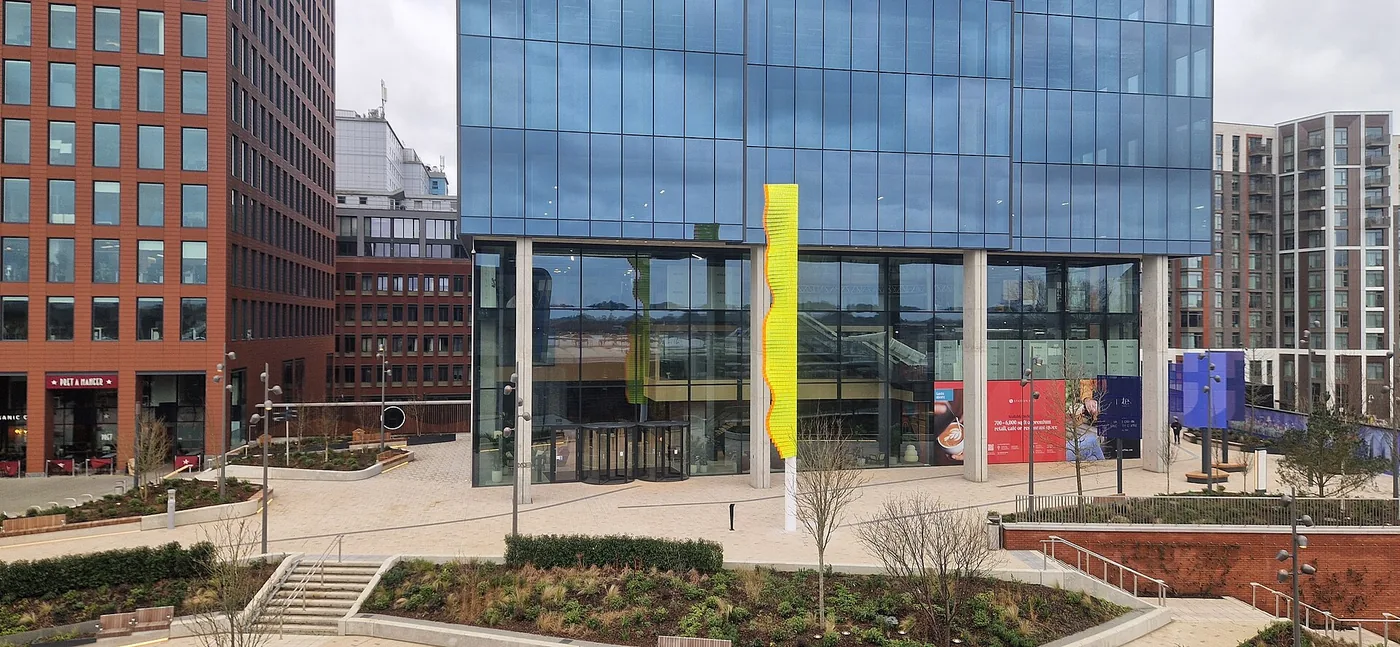
The largest thing actually being built in central Reading is Station Hill, the redevelopment of the site between the station, Garrard Street and Greyfriars Road. Across three phases the scheme is planned to deliver around 1,300 homes, 625,000 sq ft of offices including the 15-storey One Station Hill, a 200-bed hotel and retail and leisure space, with phase two and outline consent for phase three granted in January 2021 (Station Hill development). The first phase, Friars Walk, delivered 538 homes and is complete.
It is a useful reminder of why 5,860 homes were already permitted before the plan was even drafted. Reading’s housing growth is largely a town centre, high-density story.
The boundary that did not move
Separately from the Local Plan, the Government confirmed its local government reorganisation decision for the area on 16 July 2026. Reading had asked for three Tilehurst wards, Birch Copse, Tilehurst & Purley, and Tilehurst South & Holybrook, to be transferred from West Berkshire into the borough, arguing they function as Reading suburbs.
The request was refused. Those wards stay with the new “Ridgeway” council covering West Berkshire. Council Leader Liz Terry said the authority “awaits further information on how this decision was reached and will consider its position and seek opportunities to make its case again” (Reading Borough Council).
For anyone dealing with planning, the practical effect is unchanged: a Tilehurst address may well be decided by West Berkshire, not Reading, and will never appear on Reading’s register. Our guide to Reading planning applications explains how to check which register to search.
What happens next
The Inspector’s letter sets out the sequence. The council must tell her when it plans to submit the draft schedule of main modifications, and she has said this “can be done in a phased manner if the majority of main modifications are ready prior to the ongoing work on water quality”. Those modifications then go out to public consultation, which is the next and probably last chance for residents to comment. Only after that does the Inspector write her report, and only then can the council adopt the plan.
The examination documents are published as they are filed, so the examination library is the place to watch. Anyone who registered during the Regulation 19 consultation should be notified of the main modifications consultation directly.
Questions people ask
How many homes does Reading’s Local Plan propose?
At least 14,850 between 2023 and 2041, an average of 825 a year, under policy H1 of the Local Plan Partial Update.
Has Reading’s Local Plan been adopted?
No. It was submitted on 9 May 2025 and remains under examination as of August 2026. Hearings finished in February 2026, and the main modifications consultation had not opened at the time of writing.
Why is the Reading Local Plan taking so long?
The main outstanding issue is water quality. The Environment Agency does not accept the council’s Water Quality Assessment and has raised concerns about the capacity of Reading Sewage Treatment Works and the impact of growth on Foudry Brook.
What is happening with Kentwood Hill and Armour Hill?
Both are allocated for housing in the submitted plan, but the land was accepted as a Local Wildlife Site in February 2026. The Inspector has asked the council whether the allocations are still sound and whether the land should instead be Local Green Space.
When can I comment on the Local Plan?
At the main modifications consultation, which had not yet opened in August 2026. Watch the council’s local plan examination page for the announcement.
Sources
- Reading Borough Local Plan (Partial Update), Submission Draft, May 2025 for policy H1, the housing figures and the supply breakdown.
- EX101, Inspector’s letter following the Stage 2 hearings, 18 March 2026 for the water quality objection, the Kentwood Hill and Armour Hill questions and the next steps.
- Reading Borough Council local plan examination library for the hearing dates and the document trail to July 2026.
- Reading Borough Council on the local government reorganisation decision, 16 July 2026.
The examination is live and its position changes as documents are filed. Check the examination library for the current status before relying on anything here. Last checked August 2026.
Have your say