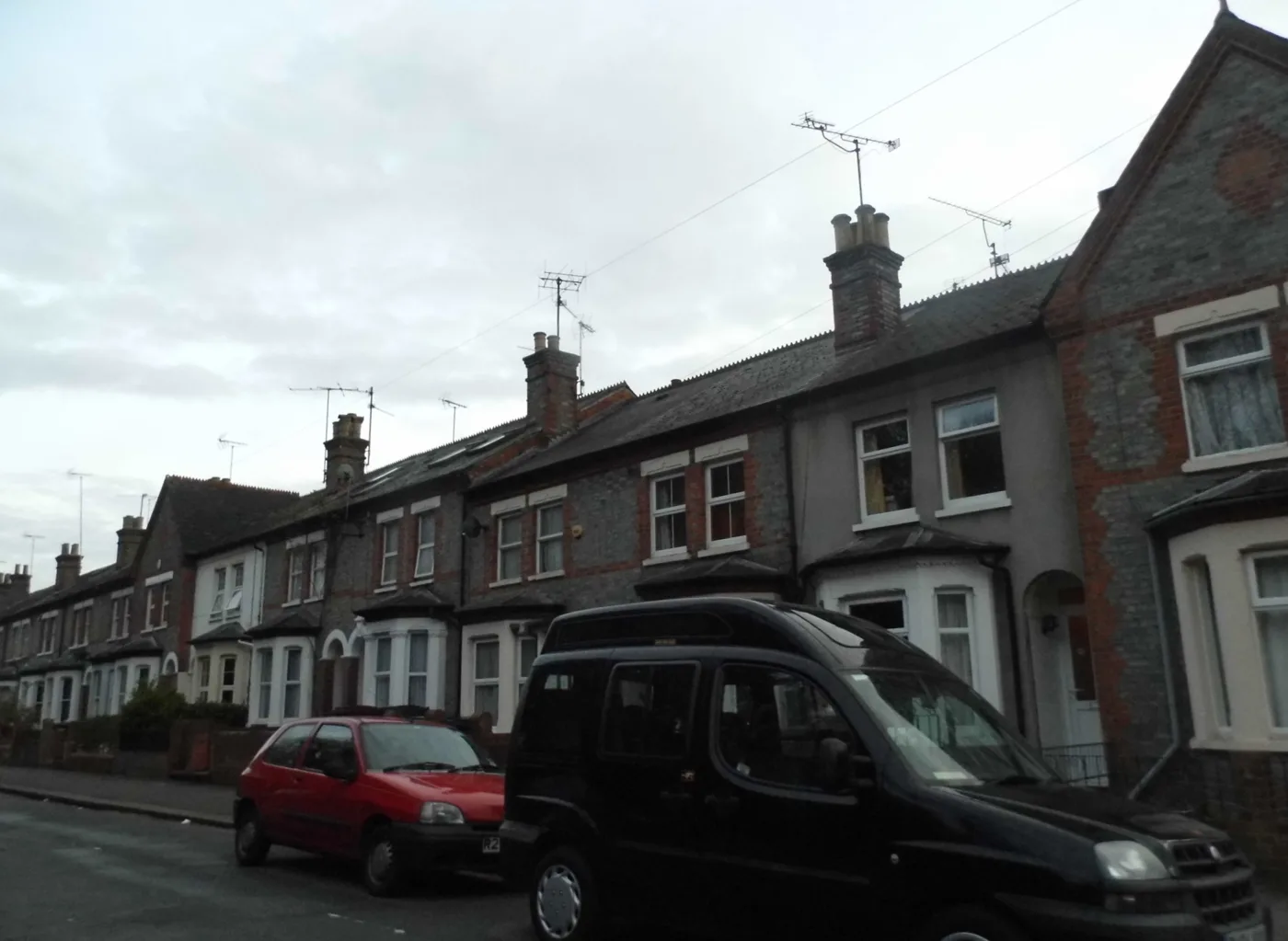

Councillors voted unanimously on 12 November to make small HMOs in parts of east Reading need planning permission. The rule starts in a year at the earliest.
Overview
Updated 14 November: the Strategic Environment, Planning and Transport Committee agreed the recommendations unanimously on 12 November, according to the council’s webcast of the meeting. The direction will now be made and notices published. People then get at least 21 days to comment before a committee decides whether to confirm it, and it comes into force at least 12 months after it is made. Officers told the meeting that the maps in the draft direction are the correct boundary, where a summary map in the report differs.
Turning a house into a small house in multiple occupation across a larger part of east Reading will need planning permission once the rule takes effect, after councillors agreed a second Article 4 direction. It covers around 10,000 addresses in parts of Park, Redlands, Katesgrove, Church and Thames wards.
Landlords across a much larger part of east Reading would need planning permission to turn a family house into a small shared house, under plans going to councillors next week. The new area holds around 10,000 addresses.
Today, anyone outside the existing controlled area can make that change without asking the council. The officers’ report recommends removing that right across parts of Park, Redlands, Katesgrove, Church and Thames wards.
The Strategic Environment, Planning and Transport Committee decides on Thursday 12 November, at 6.30pm in the Civic Centre on Bridge Street (agenda).
What would change
A small house in multiple occupation, or HMO, is a home shared by three to six unrelated people. Larger ones already need permission everywhere.
The tool is called an Article 4 direction. Reading made one in 2012, covering much of Park, Redlands and Katesgrove. This would be a second, sitting alongside it.
The maps in the draft direction show the exact boundary. The evidence document names some of what it would take in:
- St Bartholomew’s Road, and neighbouring streets north of London Road opposite Palmer Park
- Newtown, out to the river and railway
- parts of Katesgrove
- the whole of Northcourt Avenue
Officers say it covers every street where more than 15% of homes are known or suspected HMOs.
It would not start for a year
The council is not recommending that the rule starts straight away. If it did, it could have to pay compensation to landowners, which the report calls an unacceptable financial risk given the numbers involved.
So the direction would take effect at least 12 months after it is made. The report accepts that an immediate rule would have stopped further conversions in that time.
The steps from here are:
- The committee agreed on 12 November to make the direction.
- Notices go up in the area and in the local press. With around 10,000 addresses, the council does not plan to write to everyone.
- People get at least 21 days to comment.
- A committee looks at the responses and decides whether to confirm it.
- It comes into force at least 12 months after it was made.
The Secretary of State can change or cancel it.
Three years in the making
The request began with a residents’ petition about St Bartholomew’s Road in July 2023. The lead councillor agreed there was a good case, but said work could not start until late 2024 because of the Local Plan. That work slipped again.
Officers then widened the study, to avoid coming back street by street. They rejected a borough-wide rule, because national policy says directions must cover the smallest area needed.
What the evidence found
Officers surveyed 99 roads, and the council posted questionnaires to about 3,300 properties. It received 132 back, or about 4%, so most people did not reply. Of those, 82% came from three postcode areas: RG2 7, RG1 3 and RG1 4.
Most respondents wanted more control. The evidence document says they most often raised:
- pressure on street parking
- rubbish, extra bins and fly-tipping
- noise
- poor upkeep of houses and gardens
Some respondents disagreed. They said HMOs give affordable homes to students, key workers and vulnerable people, and that bad management is the real problem. A minority said more control would add cost and reduce the supply of cheap housing.
The street survey found houses with more than one red, black or green bin on about 40% of the roads, and to-let signs on a quarter. Officers saw little noise on most streets, though they could only visit outside term time. Most residents told them many HMOs do not house students anyway.
The council’s equality assessment notes the trade-off. HMOs can be valued homes for younger adults, but can put pressure on housing for families.
What it means for you
- If you live in the area, you could comment on future conversions once the direction is in force, because they would need a planning application. Today you get no say.
- If you own a house there and plan to let it as an HMO, the right would remain until the direction takes effect. After that you would need permission and would pay a planning fee.
- If you rent a room, nothing changes now. Council policy allows a proportion of HMOs on a street but aims to stop them dominating it.
The papers are on the committee page. Our planning applications guide explains how to comment on a scheme.
Have your say