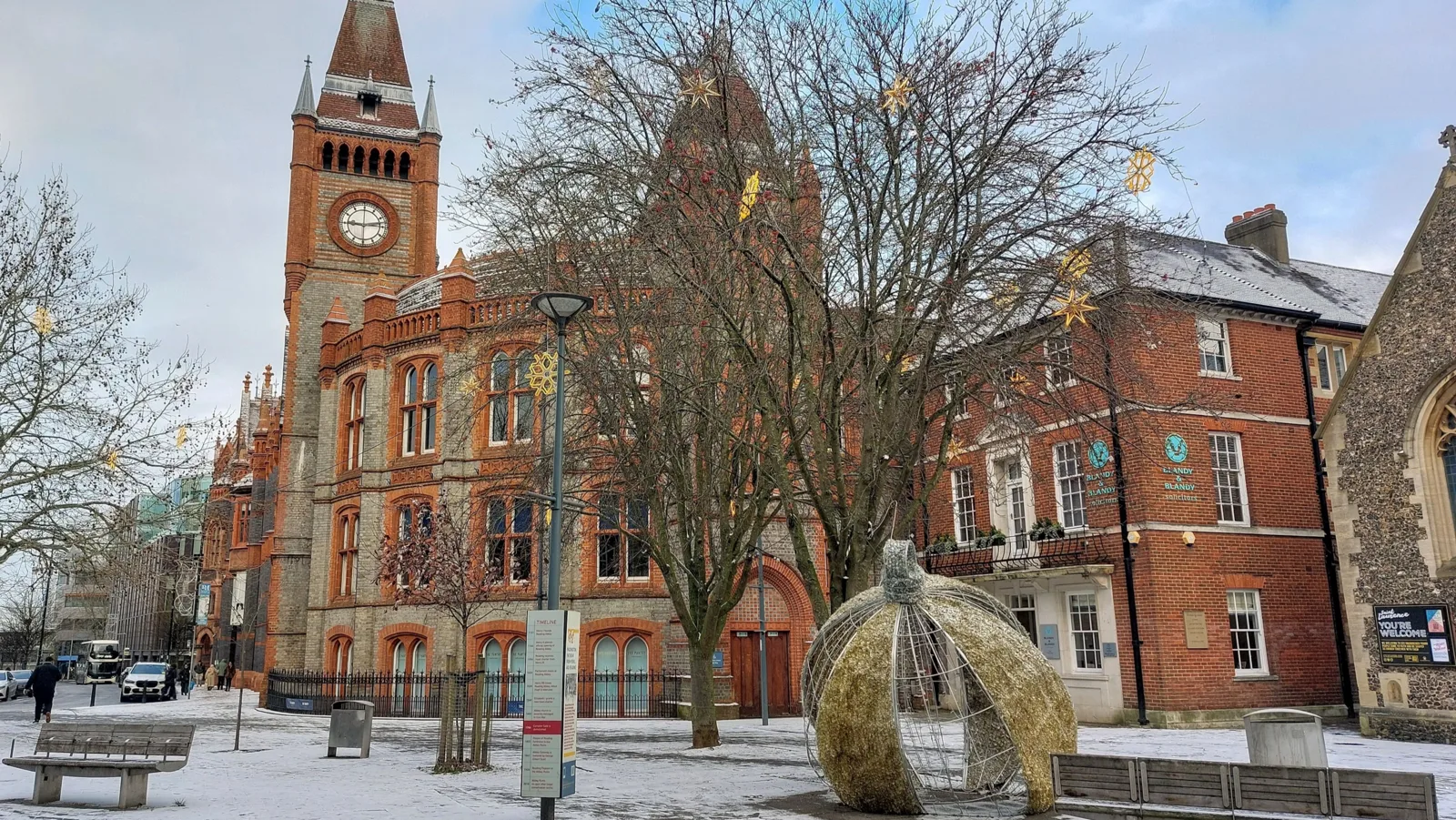

Reading has 900 tonnes of salt and 48 grit bins for winter 2026/27, with routes unchanged. Last winter needed 30 primary runs, against 54 the year before.
Reading’s gritters are on standby for the winter, with 900 tonnes of salt in stock and no changes to the roads they treat. The council’s Winter Service Plan for 2026/27 also keeps all 48 public grit bins in their current places.
The plan goes to the Housing, Neighbourhoods and Leisure Committee for approval on Wednesday 18 November (committee papers). The council says the service is ready to act between November and April whenever freezing conditions are forecast (Reading Borough Council, 11 November).
Which roads get gritted
The council grits two networks before frost or ice is forecast, according to the Winter Service Plan 2026/27:
- Primary routes: about 120km, or roughly 30% of the borough’s roads. They cover the principal roads, the main bus routes and the routes to the Royal Berkshire Hospital. The A33 and its bus lanes, and the junction 11 gyratory, are included.
- Secondary routes: about 42km, or roughly 11% of roads. They cover the rest of the bus network and roads linking the main routes.
The contractor must start within an hour of the call and finish every route within three hours of leaving its depot. Twenty bridges get a double dose of salt, including Caversham Bridge on Bridge Street, Reading Bridge on George Street and the A33 bridges over the Kennet.
So if your street is not a bus route or a main road, it will not be gritted. Pavements are not salted either, with one exception. When snow is expected to lie for a long time, the council treats the town centre’s core footways. In a prolonged spell it can also put pavement snow ploughs on Reading and Caversham bridges and the Christchurch footbridge.
Shared pavements and off-road cycle paths are not gritted. Cycle lanes painted on a gritted road are treated along with the road.
Where the 48 grit bins are
Every bin had to score at least 60 out of 85 on the council’s risk assessment to qualify. The plan lists none in east Reading.
| Area | Grit bin locations |
|---|---|
| North (25) | Blenheim Road, facing Oakley Road; Brill Close, outside No. 25; Christchurch footbridge, south side; Crawshay Drive at Kidmore End Road; Eliot Close at Grove Hill; Fallowfield Close; Glenrhondda, near No. 14; Gravel Hill, opposite Nos. 31 and 33; Grove Hill; Hemdean Road, near Badgers Rise; Highdown Hill Road at Soane End; Horse Close, near No. 26; Hunters Chase; Keston Close at Donegal Close; Luscombe Close; Picton Way; Ruskin, on the bend; Russet Glade; Scott Close; Sheriden Avenue at Hemdean Road; Surley Row at Sheep Walk; Tredegar Road (two bins, one at Glenrhondda); Tymawr, opposite No. 21; Upper Warren Avenue near St Peters Avenue |
| West (16) | Brooksby Road at Juniper Way; Calder Close; Carlisle Road at the A329; Dudley Close near Armour Hill; Dulnan Close; Elsley Road at Oxford Road; Little Oaks Drive at Oaks View; Oak Tree Road, opposite Nos. 49 and 51; Pottery Road near Dresden Way; Rissington Close, outside No. 5; Rodway Road at Derwent Avenue; Romany Lane at Romany Close; Sandgate Avenue near Grasmere Avenue; Taff Way near Dee Road; Thurso Close; Ullswater Drive at Elsley Road |
| South (7) | Alpine Street and Elgar Road; Barnsdale Road, opposite Windermere Road; Birdhill Avenue at Cressingham Road; Blagdon Road (two bins, near Cherry Grove and opposite Bankside Close); Brybur Close at Winton Road; Ennerdale Road at Northcourt Avenue |
The street names are spelled as the council’s plan gives them. The contractor refills the bins through the winter and collects them at the end of the season.
No new grit bins were requested this year for public roads. One request came in for The Warren in Caversham. The plan says the road was assessed in 2011/12, did not score highly enough, and is not reassessed unless something on site has changed.
A quiet winter last time
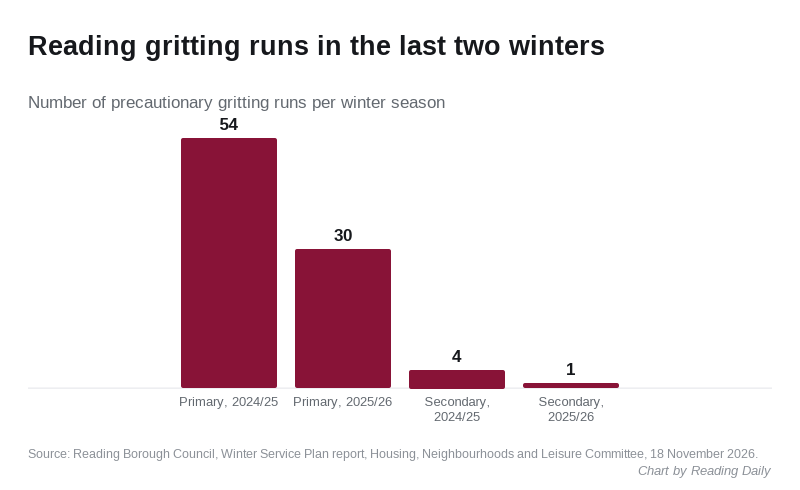
Last winter was mild and very wet, the council says. It needed just 30 primary gritting runs and one secondary run, against 54 primary and four secondary runs in 2024/25. The snow plan was never triggered.
The only extra job was on 7 January 2026. The pedestrianised part of Broad Street was hand-gritted once, after people reported ice underfoot.
The salt is kept under cover at the contractor’s site in Aldermaston. Its supplier, Compass Minerals, has told the council that national stocks would cope with a severe winter. Wokingham Borough Council’s contractor, Volker Highways, makes the gritting calls for Reading, using a Berkshire-wide forecasting service.
Other things the plan settles
- Green Park station: a resident asked for the main access road to the new station to be gritted. It will not be. The road is not adopted public highway, so the winter plan does not cover it.
- Water leaks: where a burst main is putting water on the road, Thames Water salts the area itself until the leak is fixed.
What it means for you
- Ice on your street: if it is not a bus route or a main road, expect no gritting. The nearest grit bin is in the table above, and the salt is there for anyone to use on the public road and pavement.
- Asking for gritting or a new bin: the council logs every request and assesses them at the end of the winter, so a bin asked for now would not arrive this season. Requests go to Winter.Maintenance@reading.gov.uk or 0118 937 3787.
- Cycling: the council’s advice is to use mudguards, lights and wider tyres, and to judge the conditions before setting out.
Have your say