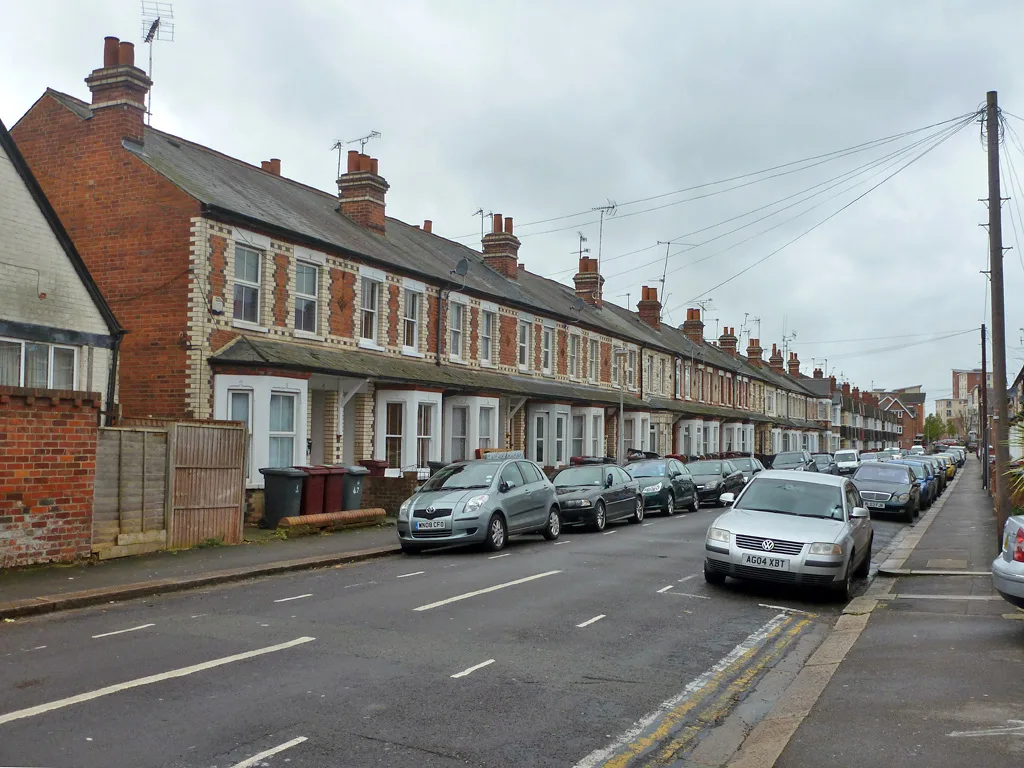

About 66,010 Reading homes, 85% of the borough, are in council tax bands A to D and qualify for the Budget's £100 energy payment from January. How it is paid.
More than eight in ten Reading homes are in council tax bands A to D, so most households in the borough should get the £100 energy payment announced in Wednesday’s Budget. It will be paid from January 2027.
About 66,010 of Reading’s 77,330 homes are in bands A to D, or 85.4%. Across England the figure is 80.8%, and across the South East it is 71.3%. The other 11,320 homes in Reading, in bands E to H, will not get the payment.
The counts come from the Valuation Office Agency’s council tax stock of properties for 2025. It records every home on the valuation list at 31 March 2025.
What the Budget announced
The government’s explainer on energy bills, published on 28 October, sets out the Household Energy Payment:
- £100 per household
- council tax bands A to D, in England only, for the household that is liable for council tax and lives in the home as its main home
- paid from January 2027
- up to 20 million households across England
- most households exempt from council tax are included; full rules are still to come
- second homes, empty properties and households not responsible for the council tax are left out
Reading’s homes, band by band
Council tax bands still rest on what a home would have sold for on 1 April 1991. Reading has:
| Band | Homes | Gets the £100? |
|---|---|---|
| A | 7,270 | Yes |
| B | 14,990 | Yes |
| C | 31,530 | Yes |
| D | 12,220 | Yes |
| E | 5,920 | No |
| F | 3,390 | No |
| G | 1,910 | No |
| H | 100 | No |
Band C is by far the biggest in Reading, with 41% of all homes. A Band C home pays £2,322.46 in council tax this year; our Reading council tax bands page has every band’s charge.
How Reading compares with Berkshire
Reading has the second highest share of homes in bands A to D among Berkshire’s six councils. Only Slough is higher.
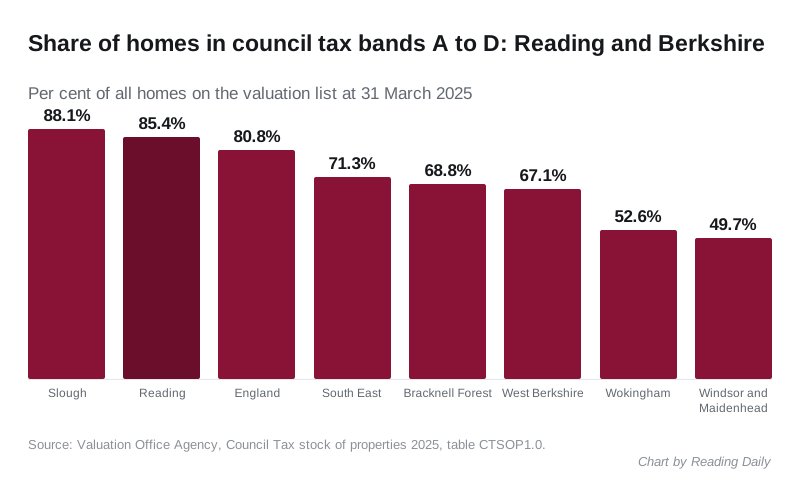
| Area | Homes in bands A to D | All homes | Share |
|---|---|---|---|
| Slough | 50,570 | 57,370 | 88.1% |
| Reading | 66,010 | 77,330 | 85.4% |
| Bracknell Forest | 37,690 | 54,820 | 68.8% |
| West Berkshire | 48,380 | 72,100 | 67.1% |
| Wokingham | 39,530 | 75,140 | 52.6% |
| Windsor and Maidenhead | 33,620 | 67,610 | 49.7% |
| South East | 2,975,430 | 4,170,770 | 71.3% |
| England | 20,815,830 | 25,754,280 | 80.8% |
The split is sharp across the borough boundary. Fewer than half of the homes in Windsor and Maidenhead are in bands A to D, and only just over half in Wokingham.
These are counts of homes, not households. Some will be empty or second homes, so the number of Reading households that receive the £100 will be a little lower. The government has not published a figure for each council.
How the money will be paid
The government says your council will handle it:
- If you pay council tax by direct debit and live in bands A to D, you do not need to do anything. The £100 will be paid into your bank account.
- If you pay another way, the council will invite you to apply.
- Nobody other than the council should contact you about it. The government warns people to give personal details only when they are sure it is the council asking.
Reading Borough Council had not said anything about the payment when we checked its newsroom on 29 October. It has not yet said when payments will go out or how the application route will work.
If your home is in Band E or above
The government is giving councils an extra £100 million to make discretionary payments to struggling households outside bands A to D. Each council sets its own rules for that fund and will publish them on its website once its scheme is ready. Reading’s share has not been announced.
Households on some means-tested benefits may also get the £150 Warm Home Discount, whatever their band.
What it means for you
- Check your band with the GOV.UK council tax band checker.
- If you are in A to D and pay by direct debit, the £100 should arrive from January without you doing anything.
- If you pay by cash, card or standing order, look out for the council’s invitation to apply.
- If you are in Band E or above and struggling, watch for the council’s discretionary scheme. We will report the rules when it is published.
- Treat any text or email about the payment with suspicion unless it clearly comes from Reading Borough Council.
The same Budget also put Reading on course for a Thames Valley mayor in 2028.
Have your say