
Reading's council tax support would switch to weekly income bands in April 2027: 3,225 claims unchanged, 477 gain, 472 lose. Consultation opens 17 September.
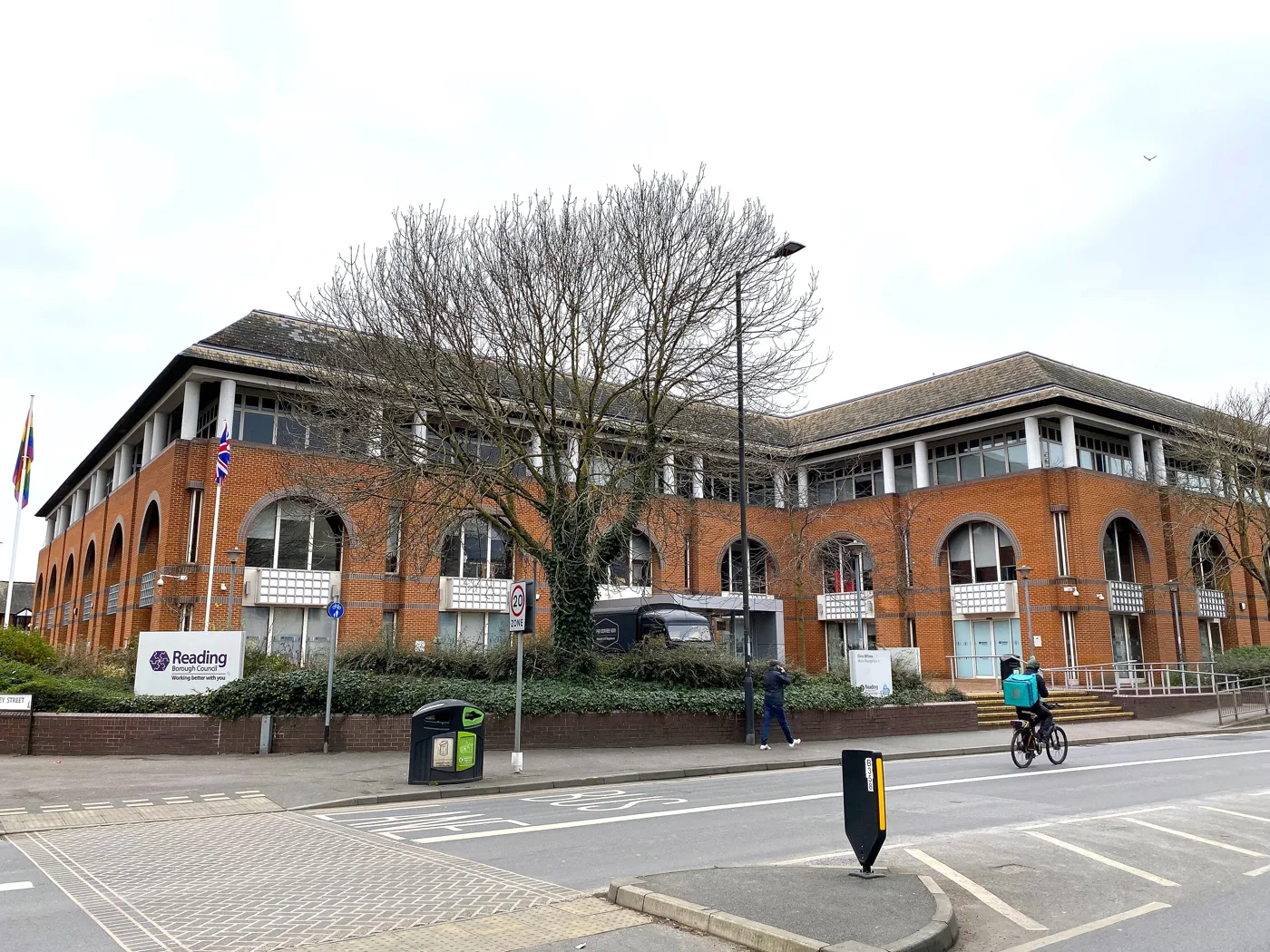
Reading Borough Council wants to scrap the forms. Under a scheme going to councillors on Wednesday, anyone of working age on universal credit would have their council tax reduction worked out automatically from the figures the Department for Work and Pensions already holds.
The council has also published who wins and who loses. Of 4,174 live working-age claims, 3,225 would see no change. 477 would get more support. 472 would get less.
Public consultation runs from 17 September to 19 November 2026. The new scheme would start in April 2027 (Council Tax Support Scheme report, item 13).
Councillor Ruth McEwan, the lead councillor for corporate services and resources, said the change “will remove the need for residents to spend time filling in forms if they are on universal credit, as the reduction would be automatically awarded”.
What actually changes
The present scheme dates from 2013 and has not been altered since 2022/23. It works out an “applicable amount” for each household and recalculates whenever income moves. For people on universal credit, whose payments change month to month, that means a stream of revised bills.
The proposal replaces that with nine income bands. Your weekly income puts you in a band, and the band sets your discount.
The main changes are:
- income bands replace applicable amounts, so small income changes no longer trigger a recalculation
- a DWP universal credit notification counts as both the claim and the change of circumstances, so there is no form to fill in
- a £25 disregard is introduced for households with earned income
- backdating of a late claim goes up from one month to three
- capital stays capped at £6,000, and the maximum award stays at 70% of a Band D charge
Child benefit, child maintenance, personal independence payments, disability living allowance, war pensions and fostering payments are all disregarded. So are the housing cost, disabled child, capability for work, carer and childcare elements of universal credit. The standard allowance, the child element and transitional protection do count as income.
None of this touches pensioners. The pension-age scheme is set by government, not by Reading.
The bands, if you are single or a couple
Figures are weekly income. The percentage is the discount against your council tax bill.
| Weekly income, single | Weekly income, couple | Discount |
|---|---|---|
| £0 to £160 | £0 to £200 | 70% |
| £160.01 to £180 | £200.01 to £220 | 65% |
| £180.01 to £200 | £220.01 to £240 | 60% |
| £200.01 to £240 | £240.01 to £280 | 50% |
| £240.01 to £280 | £280.01 to £320 | 40% |
| £280.01 to £320 | £320.01 to £360 | 30% |
| £320.01 to £360 | £360.01 to £400 | 20% |
| £360.01 to £400 | £400.01 to £440 | 10% |
| £400.01 and above | £440.01 and above | none |
Every child adds headroom. A single parent with one child is on the couple bands. Each further child lifts the top of every band, so a household with three children keeps the full 70% up to £320 a week and a household with five children up to £440 a week.
Officers looked at a wider-spaced version first, with bands of 70%, 56%, 42%, 28% and 14%. They dropped it because it created too many cliff edges, the points at which a small pay rise costs a household a large slice of its discount.
472 households would get less
The losses are mostly small, but not all of them. Of the 472 households modelled to lose support:
- 98 lose between £1 and £100 a year
- 197 lose between £100 and £250
- 111 lose between £250 and £500
- 44 lose between £500 and £750
- 13 lose between £750 and £1,000
- 6 lose between £1,000 and £1,250
- 1 loses between £1,250 and £1,500
- 2 lose more than £1,500
The gains follow much the same shape. Of the 477 households modelled to gain, 34 gain between £1 and £100 a year, 243 gain between £100 and £250, 105 gain between £250 and £500, 77 gain between £500 and £750, 13 gain between £750 and £1,000 and five gain more than £1,000. Only two of the 4,174 claims would stop qualifying altogether.
The report says every household identified as losing out will be written to during the consultation, offered income maximisation and debt advice, and in some cases pointed at the council’s Crisis and Resilience Fund.
The council is not saving money on this
The scheme was modelled to be cost neutral, and the modelling bears that out. The current scheme costs £4,703,840 a year. The banded version comes to £4,712,334, about £8,500 more.
The savings the council expects are administrative. It issued around 8,500 council tax support adjustment notices last year against a caseload of 7,200 claimants, just over 4,000 of them working age. Fewer notices should save roughly £5,000 in print and postage.
Reading would not be the first in Berkshire. Wokingham, Bracknell Forest and Slough already run banded income schemes. Windsor and Maidenhead and West Berkshire, like Reading, still run amended versions of the old council tax benefit rules. Nationally, a study by entitledto in May 2025 found just over 40% of English councils had moved to income bands.
What it means for you
If you are of working age, on universal credit and already getting council tax support, the odds are your award does not move. Read the bands above against your weekly income, remembering that child benefit, PIP, DLA and the housing element of universal credit do not count.
If you are entitled but have never claimed, this is the change that matters most to you. From April 2027 the council would pick you up from DWP data rather than waiting for a form, and a late claim could be backdated three months instead of one. Until then the existing scheme applies and you still have to apply. Our Reading council tax bands page sets out what a Band D bill actually is and what other discounts exist.
If you think you are one of the 472, the consultation is the moment to say so. It opens on 17 September and closes on 19 November, on the council’s consultation portal. A representative sample of council tax payers will be written to, and the council says everyone modelled as losing out will be contacted directly.
The decision is not made on Wednesday. Councillors are asked only to endorse the draft and let the consultation run. The scheme itself has to go to Full Council with the budget in February, and by law it must be approved before 31 January 2027.
Questions people ask
When does Reading’s new council tax support scheme start?
April 2027, if it is approved. The consultation runs from 17 September to 19 November 2026 and Full Council has to sign the scheme off before 31 January 2027.
Will I still have to fill in a form for council tax support?
Not if you are of working age and on universal credit. The proposal uses the DWP’s universal credit notification as the claim and as the change of circumstances, so the reduction would be awarded automatically.
Does this change council tax support for pensioners?
No. The pension-age scheme is prescribed by government under the Council Tax Reduction Scheme (Prescribed Requirements) (England) Regulations 2012 and is not Reading’s to alter.
What is the most support I can get?
70% of the council tax charge, and for properties in Band D and above the award is capped at 70% of the Band D charge. Capital is capped at £6,000. Both of those limits are unchanged.
Where do I have my say?
Online at the council’s consultation portal from 17 September, or at a stakeholder listening and engagement session the council says it is arranging. The consultation closes on 19 November 2026.
Sources
- Council Tax Support Scheme, report to Policy Committee, 16 September 2026 for the recommendations, the caseload modelling, the gain and loss tables, the cost comparison and Appendix 2’s band table.
- Policy Committee agenda, 16 September 2026 for the meeting, the venue and the item number.
- Reading Borough Council: consultation on simpler and faster council tax support scheme set to launch, 10 September 2026, for the consultation dates and Councillor Ruth McEwan’s comment.
Figures are the council’s own modelling on a May 2026 snapshot of the caseload. Checked 13 September 2026.
Have your say